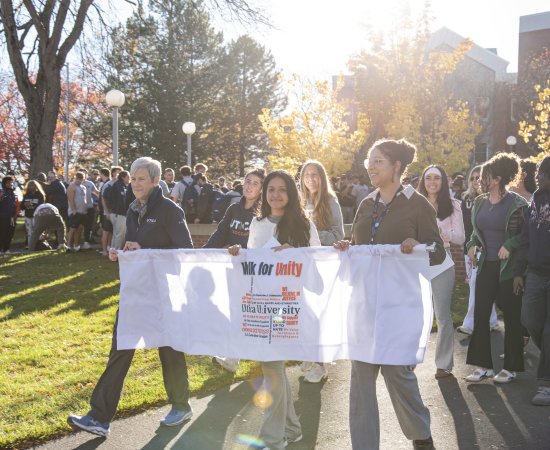
Stronger Together – Unity Walk 2026
Putting feet to pavement amid the golden rays and the autumn colors as rich and multiple as the backgrounds and...

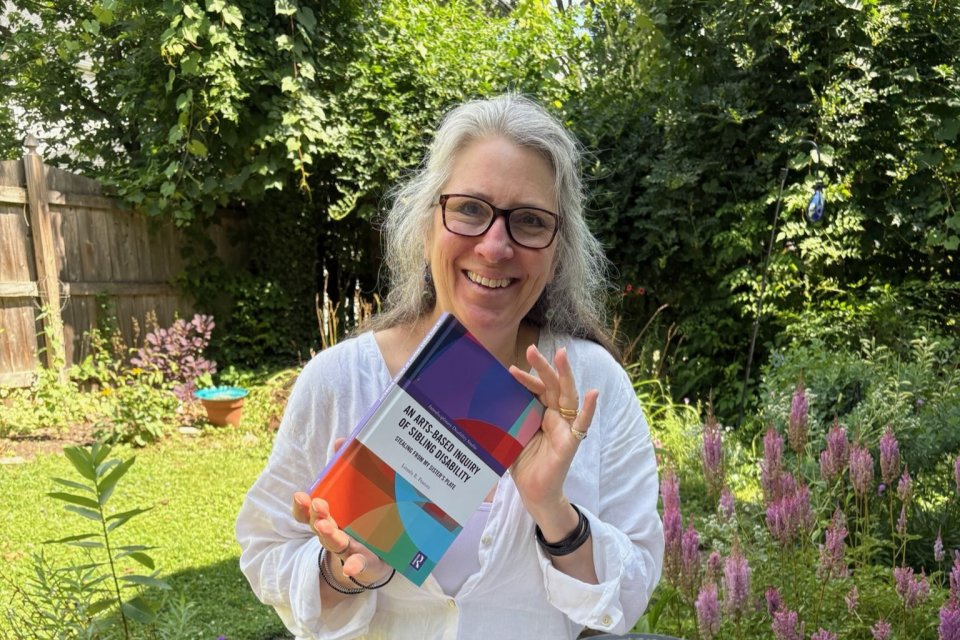
New book by Dr. Linnéa Franits examines sibling dynamics around disability
Growing up with a sister who had major medical problems and was considered disabled, Associate Professor of Occupational Therapy Dr. Linnéa Franits frequently saw Occupational Therapists working with her sibling. The practical and creative approach they took in helping her thrive struck a chord – one that resonated for the rest of her life and inspired a career in Occupational Therapy that has spanned more than three decades at Utica.
Years ago, while she was completing her Ph.D. program, doing research, writing, and somehow maintaining a full teaching load at Utica, something hit her.
“While I’ve published research about other topics, being the sibling of someone with disability has always been an underlying area that needed excavation,” she says. “When I realized that there is very little research done by siblings of people with disabilities, I decided to use the opportunity of my doctoral experience to delve into that area.”
That research would take form as her dissertation, completed in 2024, and as the subject of a new book – “An Arts-Based Inquiry of Sibling Disability – Stealing from My Sister’s Plate.”
The book examines texts and other artistic works rendered by siblings of individuals with disabilities, interrogating the impact of disability on the identity of non-disabled siblings. This includes an arts-based analysis of Dr. Franits’ own experiences as depicted in photo essays and texts.
“I tried other research methodologies, but when I saw the art that other siblings of people with disabilities were making, I realized that arts-based research was the best fit for my inquiry. The art that I made and wrote about led to findings that could not have been accessed in other ways.”
Though the book was released in April 2025, Dr. Franits has been conducting the research that inspired it for years. It has been, in many ways, a journey of discovery.
“There were many surprising findings that I did not anticipate and am grateful for the artistic process that facilitated the unveiling of this knowledge,” she says. “For example, in one of the memoirs that I analyzed for my project, the author coined the term ‘big little sister’ to describe the caregiving role that she grew into as her sister needed more help. This resonated quite a bit with my own experience, and I created a photo collage that represented three roles; my big sister, me as little sister, and me as the ‘big little sister.’ Through this rendering, I explored the two roles that I simultaneously played, while not giving up either. This then led to further autoethnographic writing and analysis about the dynamics between what was now three sisters, instead of two.”
For Dr. Franits, those surprises along the way made the experience of researching and publishing the book particularly rewarding.
“The unexpected insights and realizations that sometimes took my breath away have made this very long process so worthwhile,” she says. “It’s also been such a joy to communicate with other sibling artists and compare notes about our work.”
In addition to her experiences as a sibling, the work she did alongside colleagues in occupational therapy and other disciplines at Utica helped define her scholarship as well.
“As occupational therapists, we are primarily concerned with the lived experiences of our clients and recognize the importance of family relationships to the health and wellbeing of our clients. These are tenets that I teach every semester and they inform my scholarship to a great extent. I have also had the great opportunity to collaborate with faculty outside of the OT department, particularly in the humanities, and these experiences have allowed me to broaden my perspective to better understand the variety of narratives associated with disability. My work demonstrates the historical ideals of Utica University that a foundation in the liberal arts is critical to becoming an ethical and empathetic practitioner.”
She hopes that when others dive into her research and its findings, they see that the siblings of people with disabilities have a specific and unique knowledge that deserves attention.
“Proximity to disability is a position of privilege that enables siblings to fight oppressive practices and establish places of belonging for those who identify as disabled,” Franits says.
For a general list of frequently used logins, you can also visit our logins page.