


Student Success
What We Do
Student Success is responsible for helping to provide proactive academic support to students. The Division includes the Office of Learning Services, Tutoring and Success Coaching. It is our goal to provide academic support for students to take responsibility for their learning so they are equipped to engage effectively in the Utica University community.
Office Location
117 Hubbard Hall
Hours
Monday-Friday, 8 a.m. to 5 p.m.
No matter what major you choose, Utica University wants to make sure you succeed.
Student Success serves every student on campus and is dedicated to ensuring that they get the assistance they need to succeed in their University studies. Our Success Coaches are dedicated to giving you the support you need to succeed in your financial, academic, and personal life. Whether you have questions about making the transition to university life, succeeding in your class work, accessing financial aid, keeping your accounts up to date, or anything else, your CARE Team is there to help keep you on track to your goals.
Search by Major:
| Major: |
FOR THESE MAJORS:
Accounting (MS - Online)
Computer Science (MS)
Cybersecurity (MS)
Cybersecurity Operations Management (MS)
Data Science (MS)
Financial Crime and Compliance Management (MS)
Forensic Accounting (MS)
Management (MBA - Online)
CONTACT:
Andrea Casuras, Ph.D.
Assistant Director of Student Success
315-792-3849
Email Andrea
Make an Appointment

Angela L. Fistick
Financial Aid Counselor
315-792-3340
Email Angela
Make an Appointment

Joanne Johnson
Financial Aid Counselor
315-792-3906
Email Joanne
Make an Appointment
FOR THESE MAJORS:
Accounting
Business Administration
Business Data Analytics
Business Management
Digital Media Marketing
Economics
Finance
Healthcare Administration (MHA)
Health Care Management
Nursing Home Administrator (CAS)
Public Relations and Marketing
Sports Management
CONTACT:

Allison Harper
Success Coach
315-792-3735
Email Allison
Make an Appointment
Angela L. Fistick
Financial Aid Counselor
315-792-3340
Email Angela
Make an Appointment
Joanne Johnson
Financial Aid Counselor
315-792-3906
Email Joanne
Make an Appointment
FOR THESE MAJORS:
Construction Management
Criminal Intelligence Analysis
Criminal Justice
Cybersecurity
Cybersecurity Operations Management (BBA)
Economic Crime Investigation
Financial Crime Investigator (Certificate)
Fraud and Financial Crime Investigation
CONTACT:
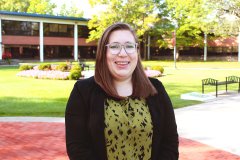
Sam Vincent
Success Coach
315-792-3385
Email Beth
Make an Appointment
Angela L. Fistick
Financial Aid Counselor
315-792-3340
Email Angela
Make an Appointment
Joanne Johnson
Financial Aid Counselor
315-792-3906
Email Joanne
Make an Appointment
FOR THESE MAJORS:
Africana Studies
Animal Behavior
Biology
Biochemistry
Chemistry
Communication and Media
Communication Arts
Computer Science
English
French
Geoscience
History
International Studies
Liberal Studies
Mathematics
Neuroscience
Nutrition
Nutrition and Dietetics
Philosophy
Physics
Political Science
Psychobiology
Sociology and Anthropology
Spanish
Undeclared Students
CONTACT:

Stephen Banks
Success Coach
315-792-3532
Email Stephen
Make an Appointment
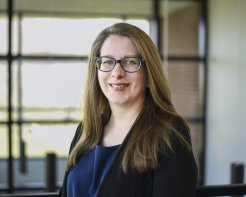
Alyssa Schleicher
Financial Aid Counselor
315-792-3174
Email Alyssa
Make an Appointment
FOR THESE MAJORS:
Adolescence Education (all subject areas)
Adolescence Education and Students with Disabilities
Adolescence Education - Grade 5-6 Extension
Non-Matriculated Studies
CONTACT:

Mike Elliott
Success Coach
315-792-3030
Email Mike
Make an Appointment
Alyssa Schleicher
Financial Aid Counselor
315-792-3174
Email Alyssa
Make an Appointment
FOR THESE MAJORS:
Psychology
CONTACT:
Stephen Banks
Success Coach
315-792-3532
Email Stephen
Make an Appointment

Christina Kallasy
Financial Aid Counselor
315-792-3179
Email Christina
Make an Appointment
FOR THESE MAJORS:
Exercise and Wellness Studies
Health Education and Physical Education
Health Studies / Health Sciences
Nursing
Nursing (RN to BS)
Wellness and Adventure Education
CONTACT:

Anne Patterson
Success Coach
315-792-3160
Email Anne
Make an Appointment
Christina Kallasy
Financial Aid Counselor
315-792-3179
Email Christina
Make an Appointment
FOR THESE MAJORS:
Childhood Education
Childhood and Special Education
Child Life and Family Science
Early Childhood Education
Early Childhood and Childhood Education (Birth to Grade 6)
Early Childhood and Childhood Education: Psychology - Child Life
Psychology - Child Life
Occupational Therapy
Physical Therapy
Therapeutic Recreation
CONTACT:
Mike Elliott
Success Coach
315-792-3030
Email Mike
Make an Appointment
Christina Kallasy
Financial Aid Counselor
315-792-3179
Email Christina
Make an Appointment
FOR THESE MAJORS:
Accelerated Bachelor of Science in Nursing (ABSN - Florida)
FLEX Track Nursing (Florida)
Physical Therapy (tDPT – Online)
CONTACT:
Andrea Casuras, Ph.D.
Assistant Director of Student Success
315-792-3849
Email Andrea
Make an Appointment
Christina Kallasy
Financial Aid Counselor
315-792-3179
Email Christina
Make an Appointment
FOR THIS MAJOR:
Accelerated Bachelor of Science in Nursing (ABSN - Latham)
FOR THIS MAJOR:
Accelerated Bachelor of Science in Nursing (ABSN - Syracuse)

FOR THESE MAJORS:
Graduate Students (On-Campus Programs)
CONTACT:
Andrea Casuras, Ph.D.
Assistant Director of Student Success
315-792-3849
Email Andrea
Make an Appointment
Alyssa Schleicher
Financial Aid Counselor
315-792-3174
Email Alyssa
Make an Appointment
FOR THESE MAJORS:
Nursing (MS)
Nursing Education (CAS)
Nursing Education (MS)
Nursing - Family Nurse Practitioner (CAS)
Nursing - Family Nurse Practitioner (MS)
Nursing Leadership (CAS)
Nursing Leadership (MS)
Social Work (MSW)
FOR THESE MAJORS:
Bridge Program
CONTACT:
Sam Vincent
Success Coach
315-792-3385
Email Beth
Make an Appointment
Alyssa Schleicher
Financial Aid Counselor
315-792-3174
Email Alyssa
Make an Appointment
GENERAL QUESTIONS
CONTACT:

Greg Caloia
Director of Student Success
315-223-2311
Email Greg
Make an Appointment

Jamie Barcomb-Busansky
Senior Assistant Director of Financial Aid
315-223-2494
Email Jamie
Make an Appointment

Sue Boucher
Director of Student Accounts (Student Billing Questions)
315-792-3766
Email Sue

Beth Samuels
Dean of Student Success
315-792-3064
Email Beth
Make an Appointment
Utica University's Counseling Center staff is comprised of professionally trained clinicians, licensed by the State of New York, who can assist you with a wide variety of concerns. It is our belief that the college experience is all about learning and growing, both professionally AND personally. Our work focuses on helping students gain the maximum benefit from their whole experience here at Utica.
Learn more by visiting the Counseling Center web site:
Q: Do I need to take the online math placement test?
Most Utica University students must take one math course to satisfy the general education requirements. To give you the best possible chance of success, it is important that you be placed into an appropriate math course so most incoming students are asked to take the online math placement test before they arrive for summer orientation. However, some students do not need to take the online math placement test:
- If you have completed an Associates Degree, you do not need to meet the Core requirements so you only need to take math courses if they are required for your major. Make sure that an official transcript showing that the degree has been awarded has been sent to Utica University.
- If you have transferred college math courses that are accepted as equivalent to Utica University math courses, these transferred courses will be used to assess your math placement. Some math courses will transfer only as liberal arts electives and are not suitable for establishing math placement at Utica University. An official college transcript is mandatory and a high school transcript will not suffice to receive credit on your Utica University record.
- If you earned a score of 4 or 5 on the AP Calculus Exam, you do not need to take the online math placement test. Make sure that an official score report has been sent to Utica University.
- If you have questions about this, please contact your Success Coach. To find your Success Coach please go to: www.utica.edu/studentsuccess.
Q: Do I have to take the test even if I don’t plan to take math this semester?
Yes! You will have to take math courses eventually and we need to have your placement information on file so you don’t run into delays when registering. Your test site registration is only valid for a limited time.
Q: What if I really don’t want to take the online math placement test?
Without the online math placement test or another form of placement, the only math course you will be eligible to register for is MAT100: Basic Math. If you are uncomfortable with the math placement exam, please contact your success coach.
Q: Where do I take the online math placement test?
You will receive an email from the Math Department with the URL for a website where the online math placement test is hosted, a login ID and a password that you will use to enter the test site. Note that the login and password for the online math placement test are not the same as your e-mail login and password. You can take the online math placement test from home, school, or library, using any computer with reliable access to the internet using Internet Explorer or the Firefox browser. Do not use Google Chrome. Do not attempt the math placement test over a dial-up connection. If your internet connection is too slow, image files associated with some of the problems may not display correctly. If this happens, end the session and contact Professor Andrew Reeves to authorize a new test. You must wait until you can find a more reliable internet connection.
Q: Can I use a calculator?
No. Calculators are not permitted in many of the math courses at Utica University so part of what the online math placement test assesses is your ability to do math without a calculator. You will need a pencil and paper so be sure to have these on hand before you begin a timed section of the math placement test.
Q: Who’s going to stop me from using a calculator if I take the test from home?
Good point. But why would you want to? You might end up being placed into a math course that you are not ready for. Why would you try to get into a math course that you would be likely to fail? It is wiser to let yourself be placed in an appropriate math course.
Q: Can I practice for the online math placement test?
Yes. Once you enter the website and click the link for the Math Placement Test you will see three links for timed tests on the following three topics: Basic Math, Intermediate Algebra, and Calculus Readiness. Before each of the timed tests is a practice test. The practice tests contain the same number and type of questions as are found on the real tests. You may take the practice tests as many times as you like and see whether your answers are right or wrong. You are required to explore the Basic Math practice exam before you may take the Basic Math timed test. You must take the three sections of the math placement test in order; Basic Math, Intermediate Algebra, Calculus Readiness.
Q: Do I have to take all three parts of the test?
Not necessarily. Once your appropriate level of math placement has been established, you will not need to take the subsequent sections of the math placement test. When you finish a section of the math placement test and click “Grade” you will be given a message that will let you know your current placement category and whether you should continue to the next section. Only those students who are seeking to take calculus as their first college math course will need to take all three sections of the math placement test.
Q: Can I buy more time by using the “Quit & Save” button?
No. Even if you log out, the timer keeps ticking. If you begin a timed section of the test at 2:15 p.m., the timer will run out at 3:15 p.m. even if you use “Quit & Save.” Do not use the “Quit & Save” button at all. Instead, click “Grade” to finish working on that section of the test and find out your results.
Q: What if my computer crashes or the internet goes down before I finish?
If you encounter technical problems that prevent you from completing a section of the test before the time limit runs out, contact me and describe what happened. I will authorize a new test for you. The new test will have different questions from the first test so you will have to begin the new test from scratch.
Q: I’m ready. How do I take the test?
You will receive an email from the Math Department with your unique login information for this exam. If you have not received an email, please contact The Center for Student Success and Prof. Andrew Reeves.
Q: What if I have more questions?
If you have additional questions, please contact The Center for Student Success or Professor Andrew Reeves at mathpl@utica.edu.
Being Undeclared is Okay
Did you know that up to 50% of students entering college are undecided? You are not alone. Being undeclared is okay. The Center for Student Success and The Jeremy C. Thurston '00 Center for Career Readiness are here to help you! We are dedicated to supporting you through your exploration of major and career options through workshops, personalized coaching, and career direction.
Staff:
Greg Caloia
Director of Student Success
Dr. Andrea Casuras
Assistant Director of Student Success
Helpful Links:
Contact Us
Beth Samuels, M.S.

Beth Samuels, M.S.
Dean of Student Success
(315) 792-3064
Greg Caloia, B.S.

Greg Caloia, B.S.
Director of Student Success
(315) 223-2311
I would like to see logins and resources for:
For a general list of frequently used logins, you can also visit our logins page.