Stephanie R. Nesbitt, J.D.
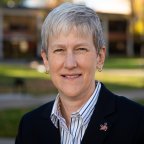
Stephanie R. Nesbitt, J.D.
Interim Provost and Senior Vice President for Academic Affairs
(315) 792-3122


Utica University offers several institutes and centers that involve participation from throughout the University and the public to address issues of common interest and concern.
These institutes and centers offer programs and conduct studies that focus on specific cultural, professional, and intellectual topics; provide services to students and the public; and bring a wide range of experts to the University to speak to interested groups.
The Applied Ethics Institute at Utica University was founded in 1986 and has been affiliated with Utica University since 1987. Under its current director, Christopher A. Riddle, the Institute promotes public discussion of contemporary ethical issues within the college, professional and civic groups, and the broader community. Its goal is to foster informed assessment of a broad range of ethical issues, including but not restricted to those related to healthcare, business and economics, science and technology, social justice and law, and the environment. The Institute works with students, faculty, professionals, and members of the public to sponsor conferences, seminars, workshops, lectures and media events. The Institute hosts a series of public lectures that are designed to be a rigorous and accessible engagement with topics that are of interest not only to academics, but the larger community. The goal of these lectures is to foster an understanding of many of the ethical issues facing society today.
In addition to these lectures, the Institute forms working groups that produce policy research on various themes throughout the year. The results of these meetings, as well as the published research, are made available to the public.
In addition to the colloquium series and the working groups, the Institute hosts an annual conference focusing on an especially urgent issue facing society that year.
Utica University's Center for Ergonomic Analysis and Research (CEAR) provides opportunities for educational programs, research, and ergonomic consultation for the institution, other companies, and their workers. CEAR's expert staff members apply the most innovative, evidence-based techniques drawn from the fields of physical therapy, biomechanics, and ergonomics to reduce workplace injuries, increase productivity, and promote health and wellness. CEAR's mission is to benefit the Utica University community through a combination of educational outreach efforts, research and service-learning projects, and consulting contracts.
Established during the spring semester 2000, the Center for Historical Research, sponsored by Utica University's history department, provides resources and assistance to students, faculty, and members of the community, who are working on local and global history projects. The objectives of the center are to:
The Computer Forensics Research and Development Center (CFRDC) of Utica University opened May 7, 1999. It is the result of a study on the state-of-the-art in computer forensics funded by the Air Force Research Laboratory/Information Directorate. The study identified a crucial need for an organization to facilitate the research and development of a new generation of computer forensic tools and methods. The CFRDC brings together key organizations from the military, law enforcement, commercial industry, and academe to help rapidly advance the emerging field of forensic information sciences. The center is located at Utica University and is governed by a board of advisers. Its key partners are the Air Force Research Lab, the National Law Enforcement and Corrections Technology Center - Northeast (NLECTC-NE), and WetStone Technologies, Inc.
Established in 1981 by Professor Emeritus Eugene P. Nassar, the Eugene Paul Nassar Ethnic Heritage Studies Center serves as a clearinghouse for the creation of courses, seminars, and publications in ethnic studies, especially dealing with ethnic groups of the central New York area. It oversees the development of the Frank E. Gannett Memorial Library book collection in ethnic studies. It also has coordinated ethnic festivals with the Friends of the Library, honoring the larger ethnic populations of Utica.
The Human Rights Advocacy Program of Utica University (HRAP) was established in 1992 by attorneys Theodore Zang, Esq., and Utica Professor Theodore S. Orlin, Esq. HRAP's purpose is to counsel and train non-governmental organizations (NGOs) in transitional democracies. Accordingly, with the support of Utica College and private donations, it regularly works with human rights advocates in Eastern and Central Europe (e.g., Albania, Bulgaria, Kosova, Moldova, Romania, Slovakia), Africa, and the Far East (Taiwan). HRAP's approach is to provide in-field training and technical assistance to human rights NGOs and their supporters, as well as to provide counsel via international communications. HRAP works closely with Helsinki Committees and independent human rights NGOs, supporting their legal defense efforts, the monitoring of human rights violations, and their human rights education programs, etc. It also provides technical support and training to university human rights centers in the Balkans and elsewhere. As part of its training effort it invites young human rights advocates from transitional democracies to study and train at Utica University for a semester. Studying along with Utica University students, these advocates study human rights law and other specialties areas, bringing back to their own country skills and knowledge useful for human rights work. Utica University students benefit from their exposure to the experiences of these human rights advocates.
The Institute for the Study of Integrative Healthcare provides many opportunities for students to collaborate and participate in professional research, as well as establish strong partnerships with healthcare providers in the community. Integrative healthcare acknowledges the varied strategies that individuals may choose to keep themselves healthy, including a broad range of strategies – some of which are evidence-based and some perhaps not – which could include natural, cultural and other traditional interventions. In short, it is treating the ‘whole’ patient.
The idea for a Consortium was initiated at a Human Rights Education conference at the University of Dayton (Dayton, Ohio) in April 1999. The Consortium was created as an informal arrangement in 2000 at a meeting held at Utica University (then Utica College). In attendance were faculty representatives from Universities/Colleges offering undergraduate degree granting human rights programs as well as other prominent educators.
The Consortium takes its inspiration from the Universal Declaration of Human Rights (1948)... "that every individual and every organ of society, ...shall strive by teaching and education to promote respect for these rights and freedoms...". Its aims and purposes are consistent with the United Nations General Assembly Resolution. declaring the Decade for Human Rights Education which formally ended in 2005.
Named for the former head of the Utica University public relations degree program, The Raymond Simon Institute for Public Relations was founded in 1986 with the purpose of enhancing Utica's public relations and journalism programs. To achieve this purpose, the institute:
Funding for the PIR program was made possible by a grant from Owen Comora '53 and his wife, Betty, and is named after her late mother. Each year, the RSI also presents:
Each of these annual scholarships and cash awards, made possible through generous contributions from PR/J alumni, are granted to encourage excellence on the part of students in the public relations/journalism program. Selection of the awardees is made by the PR/J faculty and the executive director of the RSI.
The Center of Public Affairs and Election Research was launched on January 1, 2017 by Professor Luke Perry and the Department of Government and Politics at Utica University. The Center seeks to serve citizens, journalists, students, and scholars by providing research, commentary, and analysis of state, national, and international politics. The Center does this through their website, which provides free content designed for a general audience. The Center's team of over 50 contributors include Political Scientists from around the country and throughout the world, with an audience that spans all 50 states and over 160 countries.
UTICA UNIVERSITY CENTER OF PUBLIC AFFAIRS AND ELECTION RESEARCH

For a general list of frequently used logins, you can also visit our logins page.