The Structural, Sociolinguistic, and Lexical Dynamics of U.S. Spanish in Small Urban Centers: A Synthetic Analysis of Spanish in Utica, New York
1. Introduction and Socio-Demographic Background
The Hispanic population in the United States has traditionally been studied within major metropolitan centers such as New York City, Los Angeles, Chicago, and Miami (Thomas 2012, 2013b, 2016b, 2017). However, demographic shifts recorded in the 2010 U.S. Census demonstrate rapid growth in smaller, non-traditional locations across the South and Midwest, as well as rural areas of the Northeast (Thomas 2017). Utica, New York, a small city located in rural Oneida County, serves as a clear example of this phenomenon (Thomas 2012, 2013a, 2016b, 2017, 2019b).
Utica was historically a major destination for Italian immigration, with Italian serving as the primary secondary language of the city for generations (Thomas 2019b). By 2000, census figures showed that Spanish had officially surpassed Italian as the most spoken minority language in Utica (Thomas 2019b). Between 2000 and 2010, the Hispanic population in Oneida County increased by 43%, while the city of Utica saw an 86% increase in Latino residents, growing from 3,510 to 6,555 individuals and constituting 10.5% of the total population (Thomas 2016b, 2017). Demographically, the local Hispanic population is predominantly of Puerto Rican origin (60%), followed by Dominican residents (11%) and smaller groups from Central and South America (Thomas 2019a, 2019b).
Despite this rapid growth, the local Hispanic community remains relatively small compared to classic metropolitan destinations (Thomas 2013a, 2016b, 2017). Investigating the linguistic characteristics of Utica Spanish provides vital insight into whether Spanish in smaller U.S. cities represents an isolated, decaying migrant dialect or a vibrant, structured variety that aligns with broader patterns of U.S. and global Spanish (Thomas 2013a, 2013b, 2016b, 2017). Furthermore, recent developments in lexicography, such as the inclusion of the entry estadounidismo in the 23rd edition of the Diccionario de la lengua española (DLE), implicitly recognize a unique variety of Spanish specific to the United States (Thomas 2017). Studying smaller communities like Utica contributes directly to describing and mapping these U.S.-specific features (estadounidismos) (Thomas 2017).
2. Sociolinguistic Dynamics, Functional Specialization, and Language Shift
Sociolinguistic research on language choice among Utica Hispanics reveals a structured distribution across formal and informal communicative domains (Thomas 2012). Applying diglossic models of language organization (López García-Molins 2016; Moreno-Fernández 2017), research demonstrates how Hispanic residents partition language usage among English, formal Spanish, and popular Spanish (Thomas 2019a).
Survey and interview findings indicate that Spanish retains a strong presence in formal public spheres, including places of worship, commercial establishments, and local service agencies (Thomas 2012, 2016b, 2019a). In these formal settings, speakers actively choose Spanish to maintain cultural connections and facilitate community interaction (Thomas 2012). Domain resilience is particularly evident in religious contexts, where over 50% of adult participants exclusively use Spanish with clergy (Thomas 2019b). However, Spanish usage drops significantly in commercial, educational, and professional settings, shifting toward English dominance (Thomas 2019b).
Language shift toward English is most pronounced within the private domain of the home, particularly among younger, third-generation individuals (Thomas 2012, 2016b, 2019a). While first-generation immigrants demonstrate high Spanish maintenance, intergenerational transmission decreases noticeably by the third generation, where English becomes the predominant medium of daily communication (Thomas 2012). Quantitative survey data reveals a rapid intergenerational shift: 92% of respondents report using exclusively Spanish when speaking with their grandparents, whereas only 10% of grandchildren use exclusively Spanish with their grandparents (Thomas 2019a). Despite this home-domain shift, bilingualism remains widespread, and speakers across generations express positive attitudes toward preserving Spanish language skills alongside English proficiency (Thomas 2012).
Within the linguistic repertoire of Utica Hispanics, distinct linguistic varieties perform specialized functions (Thomas 2019a):
3. The Linguistic Landscape and Social Dynamics
The spatial and symbolic manifestations of Spanish in Utica's linguistic landscape provide further evidence of ethnic identity, civic friction, and internal community standards (Thomas 2019b). Public artifacts reveal how Spanish operates as both a symbol of cultural preservation and a locus of social negotiation (Thomas 2019b).
A prominent instance of civic friction occurred in 1995 with the Mural Incident (Thomas 2019b). A local Latino business owner painted a mural featuring both Puerto Rican and Italian flags to celebrate local diversity on his storefront (Thomas 2019b). Municipal authorities subsequently erased the mural with gray paint after a city council member labeled it a "warrior symbol" (Thomas 2019b). This action sparked strong public protests, uniting the local Hispanic community against perceived racial intolerance and resulting in a successful federal civil rights lawsuit (Thomas 2019b).
A second key event, the Restaurant Name Incident of 2005, highlights internal community efforts to enforce formal linguistic standards in public spaces (Thomas 2019a, 2019b). A Dominican restaurant owner named his establishment "El Carajo Restaurant", utilizing a term considered vulgar in standard Spanish (Thomas 2019a, 2019b). Public backlash from local Spanish speakers prompted the owner to modify the initial "C" to a "B" on the storefront awning, renaming the business "El Barajo" (Thomas 2019a, 2019b). This adjustment reflected active community policing to preserve formal, respectful registers in the shared linguistic landscape (Thomas 2019a, 2019b).
This public reaction to "El Carajo" contrasts sharply with the historical experience of Italian dialect loss in Utica (Thomas 2019b). Earlier in the city's history, a local bar operated under the name "The Stroonz", an Anglicized phonetic spelling of the Southern Italian profanity strunz' (stronzo in Standard Italian) (Thomas 2019b). Unlike the Dominican restaurant, "The Stroonz" caused no public controversy (Thomas 2019b). Because generational language shift had led most Italian-Americans in Utica to lose fluency in Italian dialects, the taboo nature of the word went unrecognized by the broader public, with only a few fluent speakers raising quiet concerns in private (Thomas 2019b). Consequently, while Italian underwent attrition, Spanish in Utica functions as a living symbol of identity, cultural resistance, and normative community standards (Thomas 2019b).
4. Morphosyntax in Spoken and Written Registers
To evaluate structural stability and potential language attrition in Utica Spanish, multiple morphosyntactic parameters have been systematically analyzed across spoken oral interviews and local written press samples (Thomas 2013a, 2013b, 2015, 2016a).
4.1. Expression of Subject Pronouns
In spoken discourse, Utica Spanish exhibits an explicit subject pronoun frequency rate of approximately 36% (Thomas 2013a, 2013b, 2016b). Rather than reflecting structural degradation or heavy English interference, this rate closely mirrors frequencies documented in monolingual and major bilingual Spanish-speaking cities, such as Barranquilla (Colombia), Santiago (Chile), and New York City (Thomas 2013a, 2013b, 2016b). In written Utica Spanish, explicit pronoun expression is lower, reflecting standard formal writing conventions that favor implicit subjects when context allows (Thomas 2015).
4.2. Nominal Possession and Verbal Systems
The expressional patterns of nominal possession (utilizing possessive adjectives versus prepositional phrases with de) in oral Utica Spanish align closely with patterns observed in Barranquilla and New York City (Thomas 2013a, 2016b). Furthermore, quantitative and qualitative analyses of tense, mood, and aspect within the verbal system demonstrate that Utica speakers maintain a robust, fully functioning verbal repertoire that matches data from New York's El Barrio and Los Angeles (Thomas 2013a, 2013b, 2016b).
4.3. Queísmo
Analysis of the syntactic construction preposition + (article) + que reveals significant differences across communicative registers (Thomas 2016a). In spoken Utica Spanish, the elision of required prepositions, known as queísmo, occurs at a rate of 70% in relative clauses with explicit antecedents and 75% with implicit antecedents (Thomas 2016a). While high, this rate is comparable to frequencies recorded in major monolingual Spanish-speaking cities, including Madrid (68.7%), Buenos Aires (58.2%), and San Juan (56.9%) (Thomas 2016a, 2016b).
In contrast, written Spanish samples taken from the local Utica newspaper The Observer-Dispatch show zero instances of queísmo, adhering strictly to prescriptive norms (Thomas 2015, 2016a). This sharp distinction demonstrates that Utica Hispanics operate with two clearly differentiated registers: an informal, spoken register that shares common, pan-Hispanic vernacular features, and a formal, written register governed by standard literary norms (Thomas 2015, 2016a).
Table 1: Register Comparison in Utica Spanish
Spoken Vernacular Register | Written Newspaper Register |
36% Explicit Subject Pronouns | Lower Explicit Subject Pronoun Frequency |
High Queísmo Rates (70%–75%) | Absence of Queísmo (0%) |
Frequent Discourse Tag-Switches | Adherence to Standard Relatives (cuya) |
5. English Contact Phenomena: Loanwords, Adaptation, and Global versus Local Distribution
Language contact between Spanish and English in Utica leads to various lexical and conversational phenomena, including code-switching, nonce borrowings, and established loanwords (Thomas 2013b, 2016b, 2016c, 2017, 2018). In a corpus of 10.5 hours of recorded oral interviews (totaling 45,747 words) across 16 bilingual speakers (balanced for gender and generation), 441 total tokens of English-origin discrete items (estadounidismos) were identified, accounting for 0.96% of total words (Thomas 2016b, 2016c, 2017, 2018). This proportion aligns closely with contact phenomena documented in other bilingual communities, such as Cuban Spanish in West New York (0.8%) (Thomas 2017).
These 441 tokens represent 150 unique lone English language items (LOLIs), encompassing established borrowings, nonce borrowings, and single-word code switches (Thomas 2016c, 2017, 2018). Categorized by frequency (number of uses) and diffusion (number of speakers), the breakdown is as follows (Thomas 2016c, 2017):
Table 2: Lexical Categorization of Anglicisms
Category | Definition | Unique Words | Total Tokens |
Momentary (Nonce) | 1 use, 1 speaker | 93 | 93 |
Idiosyncratic | 2 uses, 1 speaker | 32 | 80 |
Frequent | Used by >1 speaker | 25 | 268 |
To evaluate whether these 150 unique items represent localized contact features or belong to wider global varieties of Spanish, Thomas (2018) cross-referenced them against the Corpus de Referencia del Español Actual (CREA) database. The results demonstrate that 96 of the 150 terms appear in CREA, confirming that the majority of Anglicisms documented in Utica are shared with non-U.S. varieties of Spanish worldwide (Thomas 2018). Words with higher frequency and diffusion, as well as those classified as nonce borrowings, show a significantly higher rate of attestation in CREA compared to single-word code switches (Thomas 2018).
Among the 96 terms present in CREA, 26 exhibit their highest concentration in samples originating from the United States (Thomas 2018). Conversely, 54 terms are completely absent from CREA, reflecting the localized contact effect of English within Utica (Thomas 2018). Thus, while loanwords from English constitute a global phenomenon across modern Spanish dialects, specific subsets of Anglicisms play a central role in characterizing and distinguishing U.S. Spanish (Thomas 2018).
6. Morphosyntactic Adaptation and Variationist Analysis
Nouns form the largest syntactic category among estadounidismos in Utica Spanish (219 tokens, 115 types) (Thomas 2017). To determine whether single English-origin nouns function as unintegrated code-switches or as integrated lexical borrowings, comparative variationist analysis was applied at grammatical conflict sites, specifically the expression of Spanish determiners with English nouns (Thomas 2017).
Excluding unintegrated tokens (such as nouns with English plural morphology or metalinguistic comments), 152 English-origin nouns were analyzed against pure Spanish discourse (495 nouns) and pure English discourse (166 nouns) within the corpus (Thomas 2017):
This comparative distribution strongly supports the nonce borrowing hypothesis (Thomas 2017). Rather than unintegrated code-switching, bilingual Utica speakers spontaneously adapt lone English nouns into the rule-governed morphosyntactic framework of Spanish (Thomas 2017). Conversely, verbal items (such as chequear, aplicar, printear) show 100% morphological adaptation via Spanish verbal inflections (Thomas 2016c, 2017).
In contrast to content vocabulary, high-frequency functional items, such as discourse markers and tag switches (so, OK, because, yeah, wow), show no morphological or phonological adaptation (Thomas 2016c, 2017). For instance, so (63 tokens across 12 speakers) and OK (52 tokens across 9 speakers) function as pervasive bilingual discourse tags (Thomas 2016c, 2017). These functional items demonstrate that frequency and diffusion alone do not dictate structural integration; rather, functional discourse markers co-exist alongside spontaneous nonce borrowings as integral components of the U.S. bilingual repertoire (Thomas 2017).
7. Contact-Induced Pluricentricity and Lexicographical Representation
A key question in U.S. dialectology is whether English contact is forging an autonomous variety of U.S. Spanish or merely maintaining dialectal island retainments from origin countries. To test this, Thomas (2020) conducted a sociolectometrical analysis of onomasiological variation across five education-related concepts: KINDERGARTEN, ELEMENTARY SCHOOL, HIGH SCHOOL, UNIVERSITY, and SCHOLARSHIP. The Spanish spoken in Utica was compared against nationwide U.S. Spanish, Puerto Rican Spanish, and Dominican Spanish data extracted from the CORPES XXI database (Thomas 2020).
The quantitative results demonstrate that the weighted impact of English contact is significantly higher in Utica and broader U.S. profiles than in Puerto Rican or Dominican Spanish (Thomas 2020). While direct loanwords such as high school (which accounts for 41% usage in Utica) and scholarship drive this effect, semantic extensions of existing Spanish terms, such as using colegio to mean high school or escuela for university, also reflect structural influence from English academic nomenclature (Thomas 2020).
Measurements of internal and external lexical uniformity reveal critical structural patterns (Thomas 2020):
Despite Puerto Ricans and Dominicans making up over 71% of Utica's Hispanic population, local usage aligns more closely with English-influenced U.S. Spanish norms than with the native varieties of those origin countries (Thomas 2020). This finding indicates that intense contact with English serves as a primary driver of lexical divergence, actively forging an autonomous U.S. Spanish variety rather than maintaining isolated island dialects (Thomas 2020).
Evaluating Utica estadounidismos against major authoritative dictionaries highlights ongoing challenges in lexicographical documentation (Thomas 2016c, 2017). Comparing the 150 unique English-origin words from Utica speech to the Diccionario de la lengua española (DLE 2014/2016) yields only five or six matching entries, such as lonche, chequear, parking, internet, spanglish, and parada (used in Utica as a semantic extension for "parade") (Thomas 2016c, 2017). None of these entries carry a specific geographical label for the United States in the DLE, treating them instead as general borrowings (Thomas 2016c, 2017).
Comparison with the differential Diccionario de americanismos (DAA 2010) reveals 26 direct matches and up to 37 partial matches (25% of the Utica sample) (Thomas 2016c, 2017). The DAA successfully records several core terms used by Utica speakers, such as aplicación (job application), ganga (gang), printear (to print), aplicar (to apply/solicit), and welfare (Thomas 2016c, 2017). However, cross-referencing lexicographical data with variationist findings reveals theoretical tension: while traditional dictionaries aim to record community-established loanwords rather than conversational code-switches, the DAA includes unintegrated discourse tags (right, sorry, hey, wow) alongside integrated nouns (Thomas 2016c, 2017). Because advanced bilinguals seamlessly alternate between momentary borrowings and conversational tag-switches, future lexicographical efforts dedicated to U.S. Spanish, such as proposed projects by the North American Academy of the Spanish Language (ANLE), must incorporate both bilingual processing realities and variationist methodologies alongside traditional assimilation criteria (Thomas 2017).
8. Conclusion
The comprehensive analysis of Spanish in Utica, New York, demonstrates that Spanish in smaller, non-traditional U.S. urban centers is neither an isolated, decaying migrant dialect nor an unorganized mixture of English and Spanish. Instead, Utica Spanish is a structurally robust, highly organized variety that operates in tandem with broader U.S. and pan-Hispanic linguistic patterns.
Socio-demographically, Utica exemplifies the rapid expansion of Latino populations into mid-sized Northeastern cities, where Spanish has supplanted historical immigrant languages like Italian to become a central symbol of community identity and civic presence. Sociolinguistically, speakers maintain functional specialization, preserving formal Spanish in public and religious domains while exhibiting generational language shift toward English in private spheres. In the linguistic landscape, Spanish serves as a tool of cultural resistance and community cohesion, enforcing public norms of decorum that contrast with the historical attrition seen in regional Italian dialects.
Structurally, Utica Spanish displays clear register differentiation: spoken discourse shares pan-Hispanic vernacular traits such as queísmo and explicit pronoun frequencies, whereas written discourse strictly adheres to prescriptive normative standards. At the contact interface, lone English items are systematically integrated into Spanish morphosyntax via determiner agreement and verbal inflection, confirming the rule-governed nature of nonce borrowings. Finally, sociolectometrical data confirms that lexical contact with English is driving convergence toward a distinct, pluricentric U.S. Spanish variety rather than mere island dialect retainment. As lexicographical institutions like ANLE continue to map U.S. Spanish (estadounidismos), data from communities like Utica provide vital empirical grounding for understanding the future of Spanish in North America.
References
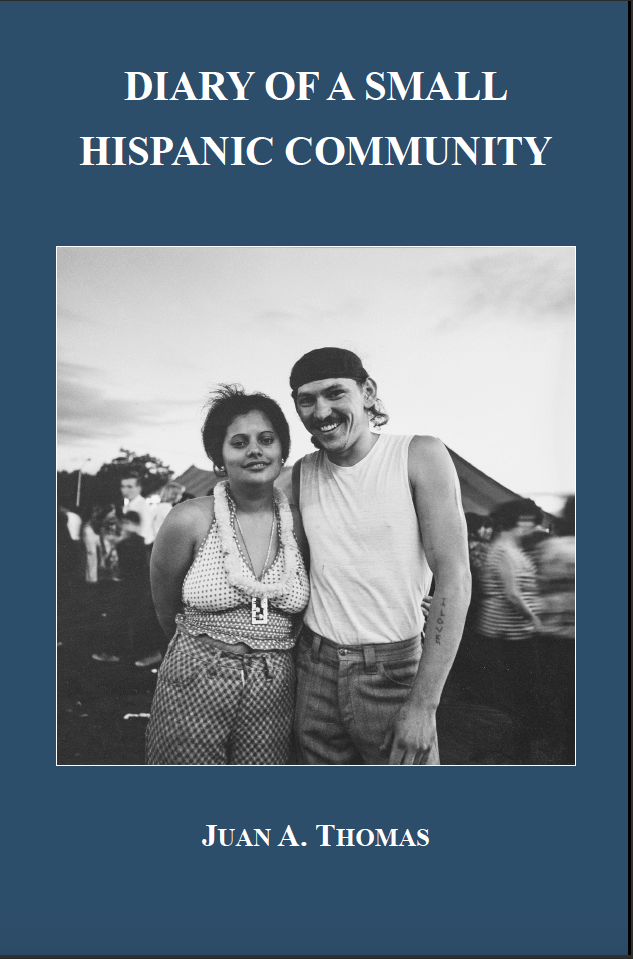
The book Diary of a small Hispanic Community (2017) summarizes the story of the Utica Latinos.
Juan Thomas